Character Styling and Expression
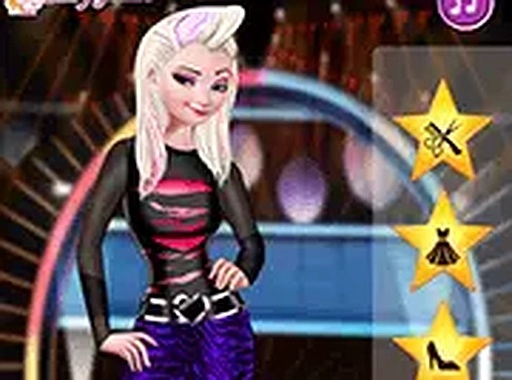
This game focuses on helping three performers get ready for a show. Players select each character one at a time and browse through a variety of hairstyles, tops, bottoms, and accessories. The goal is to create a cohesive look that reflects personal taste. There are no wrong choices, and every combination is valid. The styling interface is straightforward, allowing players to swap items quickly and see changes instantly. This process encourages experimentation with color and form without any scoring or judgment.
Stage Design and Atmosphere
Once the characters are styled, attention turns to the performance space. Players can place decorative elements like colored lights, musical instruments, and stage props. The arrangement is entirely up to the player, with no constraints on placement or quantity. This freedom allows for everything from minimalist setups to elaborate displays. The stage design directly influences the final concert presentation, making each session visually distinct. Players can rearrange items as many times as they like before finalizing.
Relaxed and Intuitive Controls
The game uses simple point-and-click interactions. There are no timers, scores, or penalties for mistakes. This design makes it accessible to younger players and those who prefer a stress-free creative outlet. Every action can be undone or redone, so players can explore freely. The interface uses clear icons and labels, reducing the learning curve to nearly zero. This approach ensures that the focus remains on creativity rather than mastering complex mechanics.
Visual Feedback and Reward
After completing the styling and stage decoration, the game plays a short animated concert sequence. The characters perform on the decorated stage, providing a satisfying payoff for the player's choices. This visual feedback reinforces the connection between creative decisions and the final outcome. The concert is not interactive but serves as a celebration of the player's work. Players can replay the sequence or return to editing at any time.
Replay Value and Variation
Because there are many clothing and decoration options, no two sessions need to look the same. Players can revisit the game to try different themes, color schemes, or arrangements. The lack of a fixed goal means each playthrough can be entirely different. Some may focus on matching outfits, while others might prioritize stage lighting. This open-ended design supports repeated engagement without becoming repetitive.




Comments
0 comments