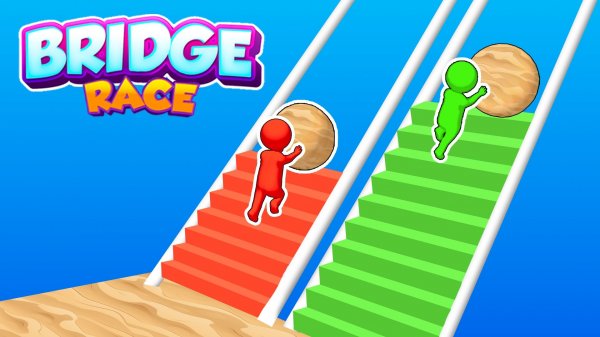
Core Objective
Color Block Crossing presents a straightforward goal: be the first to complete a bridge by gathering blocks of your assigned hue. Each round begins with players positioned on a shared board, where scattered blocks await collection. The challenge lies in balancing speed with caution, as the board is shared with opponents who can disrupt progress. The game rewards those who plan their route efficiently, making each decision about which block to pick up next a small but meaningful strategic choice.
Board Dynamics and Obstacles
The playing field is more than a simple grid. Slides and elevators introduce vertical movement, forcing players to adapt their paths on the fly. These elements add a layer of unpredictability, as a well-timed slide can propel a player forward, while an elevator might carry them to a less advantageous position. The board also contains special items that affect block count: green markers multiply the blocks a player carries, and red markers reduce them. Knowing when to seek out or avoid these items becomes a key part of the game.
Multiplayer Rivalry
The competitive edge in Color Block Crossing comes from direct player interaction. Opponents can bump into each other, causing the bumped player to drop any blocks they are carrying. This mechanic introduces a tactical layer: players must decide whether to rush for blocks or take a more defensive approach, watching the movements of others. The real-time nature of the competition means that a single misstep can shift the lead, keeping every round tense and engaging. The game supports multiple players, making it ideal for family game nights or friendly gatherings.
Visual and Audio Style
The game adopts a bright, cartoon-like aesthetic that appeals to a wide age range. Characters are simple and expressive, with clear color coding that makes it easy to track who is who on the board. Sound effects are light and playful, with distinct tones for collecting blocks, activating slides, and completing a bridge. The overall presentation avoids clutter, ensuring that players can focus on the action without distraction. This clean design supports the game's pick-up-and-play nature, making it accessible even for those new to puzzle games.
Progression and Replayability
While each round is self-contained, the game offers a sense of progression through increasingly complex board layouts. New obstacles and item placements appear as players advance, requiring them to refine their strategies. The quick round length encourages multiple plays in a single sitting, and the unpredictable nature of player interactions ensures that no two rounds feel exactly the same. For those seeking a deeper challenge, the game may include options to adjust the number of opponents or the speed of play, allowing players to tailor the difficulty to their preference.


Comments
0 comments